When electric cars are not cheaper to run than petrol and diesel models in South Africa
The cost of charging an electric car can vary greatly depending on your electricity source.
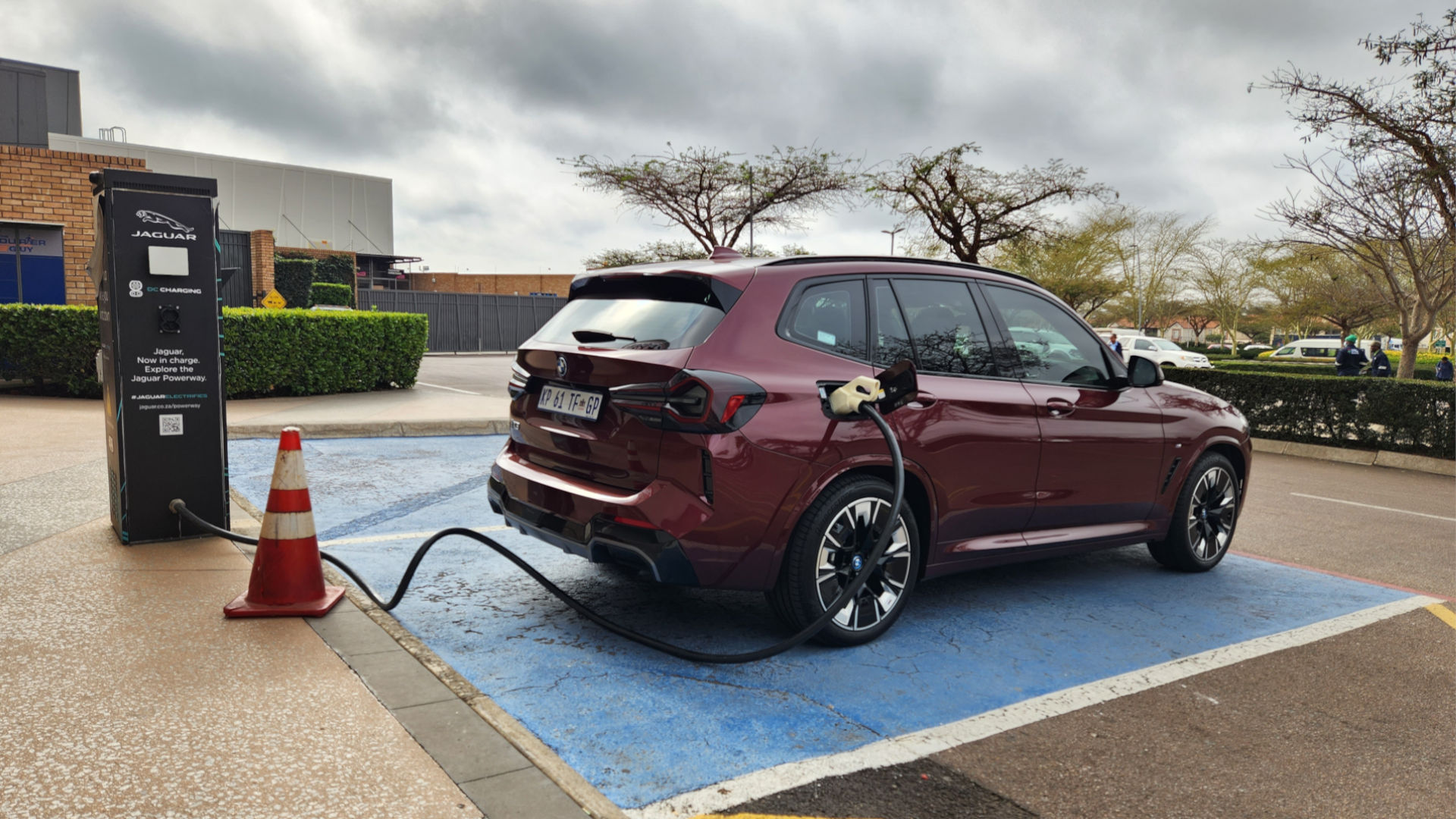
One of the most commonly advertised benefits of electric vehicles (EVs) and plug-in hybrids (PHEV) is that they are cheaper to run than petrol or diesel cars.
For most South African drivers with these vehicles, that claim holds true, as they most frequently charge up at home.
However, drivers who rely primarily on public charging stations may find their running costs quite similar to those of petrol vehicle owners.
Optimising running costs with electricity can be a bit more technically complex than working out fuel costs.
Small variations in fuel prices
In South Africa, there is only a minor variance in the prices of fuel, based on the grades and two regions — inland and on the cost.
The pump prices for both unleaded 95 and 93 petrol are regulated by the government. The differences between the two are often negligible.
Even on a 45-litre entire tank, using 93 instead of 95 will result in a cost saving of less than R10, working out to a percentage difference around 1%.
Diesel prices can range more widely as only the wholesale prices are regulated. However, service stations cannot afford
It would be rare for the most expensive and cheapest stations to typically work out to a difference of 10% to 15%.
The International Energy Agency has estimated that South Africa's average vehicle fuel consumption was about 7.4 litres per 100 kilometres.
In the first six months of 2026, the average price of a litre of unleaded 95 petrol bought inland was R23.09.
In the average vehicle, the cost per kilometre at the six-month average unleaded 95 price in the first half of 2026 would be about R1.71.
Electricity price differences far greater
In the case of electricity tariffs, the difference in prices can be greater than 100%, depending on where you charge and the type of power supply you use.
To calculate the cost of charging, EV and PHEV drivers must know the price per kilowatt-hour (kWh).
kWhs are effectively the equivalent of litres or gallons for electrical energy stored in an EV or PHEV's battery.
Conduit Energy has a comprehensive catalogue of Eskom and municipal electricity tariffs, which showed that the price of a kWh of energy in 2026 is typically between R3.00 and R4.00 per kWh.
On Eskom's most common tariff for residential customers — Homepower 4 — the flat cost per kWh was R3.56.
According to EVDatabase, the average EV consumes about 19kWh per 100 kilometres.
That means they would use 0.19kWh to cover a kilometre, which would cost R0.68 on Eskom's Homepower 4 plan.
That is 60% cheaper than the running cost of the average petrol car.
It would cost R213.60 to recharge a 60kWh battery from empty to full, providing roughly 316km of range on the average efficiency.
Those who opt for Eskom's time-of-use tariff can pay as little as R1.91 per kWh in off-peak periods, which will result in a cost per kilometre of just R0.36.
This can be especially beneficial if you can set your charger to run late at night or in the middle of the day, when off-peak tariffs apply.
Public chargers shrink savings
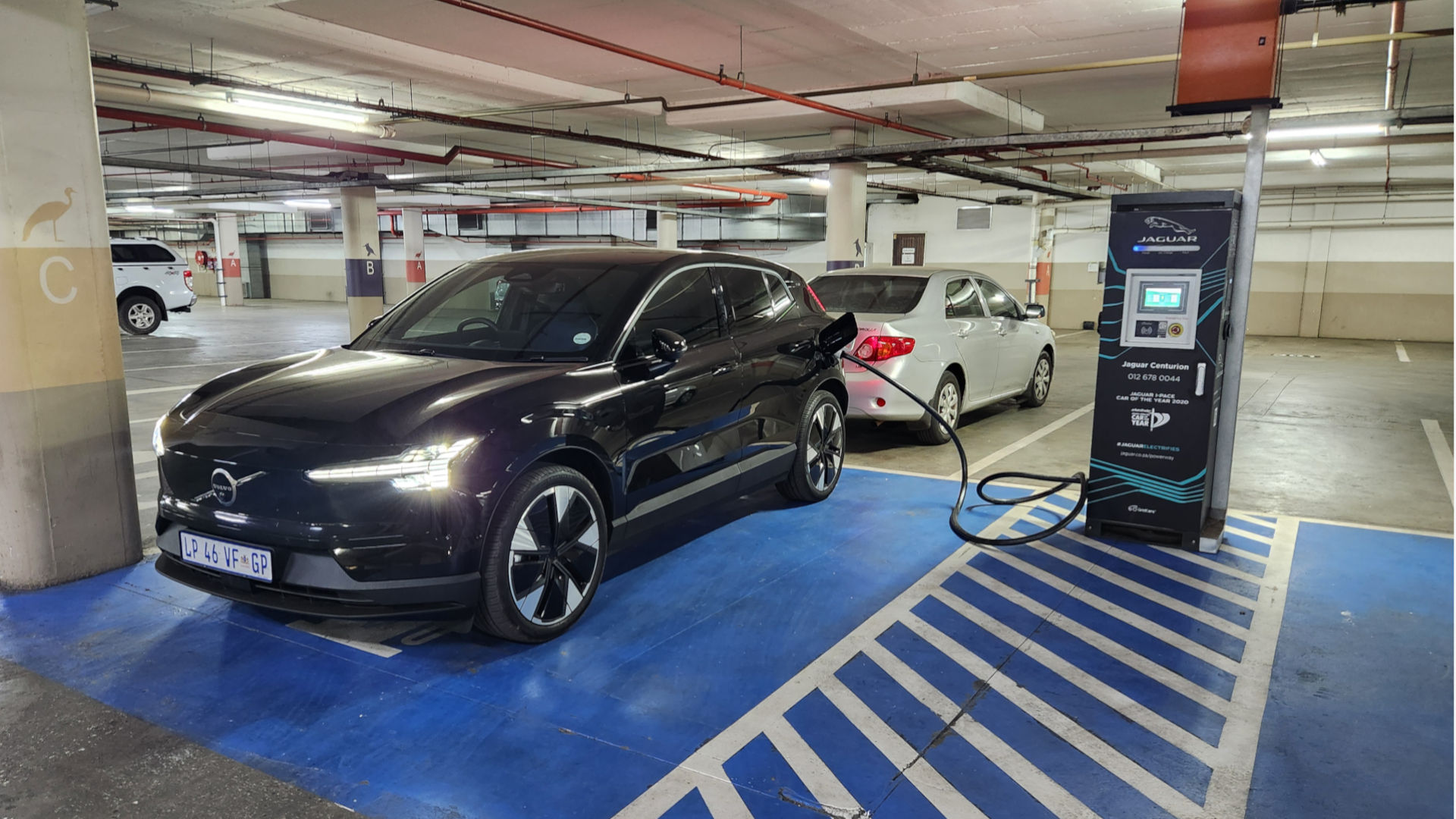
However, EV drivers are not much better off than petrol users in terms of running costs if they rely solely on public charging.
Charge point operators (CPOs) ask significantly more for the benefit of faster charging speeds and charging access in public areas.
For slower alternating current (AC) charging, which is typically available at locations where people spend a lot of time, such as a shopping mall, the rate is most frequently R5.88 per kWh.
At that rate, the cost per kilometre with the average EV will be about R1.12, reducing the savings over the average petrol car from 60% to 34%.
The results worsen at fast direct current (DC) chargers, which cost-conscious drivers should ideally only use when travelling long distances or when they need a quick emergency topup.
At these chargers, the rate is typically R7.35, although some sites charge over R9.00 per kWh.
At R7.35, the cost per kilometre increases to R1.40. At R9.00, the cost per kilometre matches the average petrol car precisely.
It is also important to consider that many of South Africa's best-selling cars are far more fuel-efficient than the average model.
The Toyota Corolla Cross and Volkswagen Polo Vivo can consume 5 or fewer litres per 100 kilometres.
At the six-month average price of R23.09, the cost per kilometre in those vehicles would be R1.15 — cheaper than when only using public DC charging and just barely more expensive than when only using public AC charging.
These numbers show that EV owners who want to prioritise cost savings must charge as much as possible at home, or where available, on free chargers.
South Africa's Home Charging Problem
Fortunately, many South Africans have their own driveways and a point of supply close to where they park.
However, a large proportion of the population resides in townhouses, complexes, and apartments.
In these properties, they may share parking with other residents, or their dedicated parking bay could be far from their own distribution board.
A Body Corporate or Homeowners Association may also be hesitant to install multiple EV chargers due to power limitations, a sound concern given many properties do not have the supply necessary to support multiple chargers at once.
Conduit ChargeSplit is an end-to-end solution to help these South Africans get a charge at home, allowing them to enjoy the low running costs of EVs and PHEVs.
Whether you are an EV owner living in such a property or represent a property manager, contact us today for the best solution for your property.