"Can I plug in my car?" The question accommodation owners in South Africa should be prepared for
Guest houses, bed and breakfasts, lodges, and hotels in South Africa may find an increasing number of guests and other visitors asking if they can charge their cars during their stay.
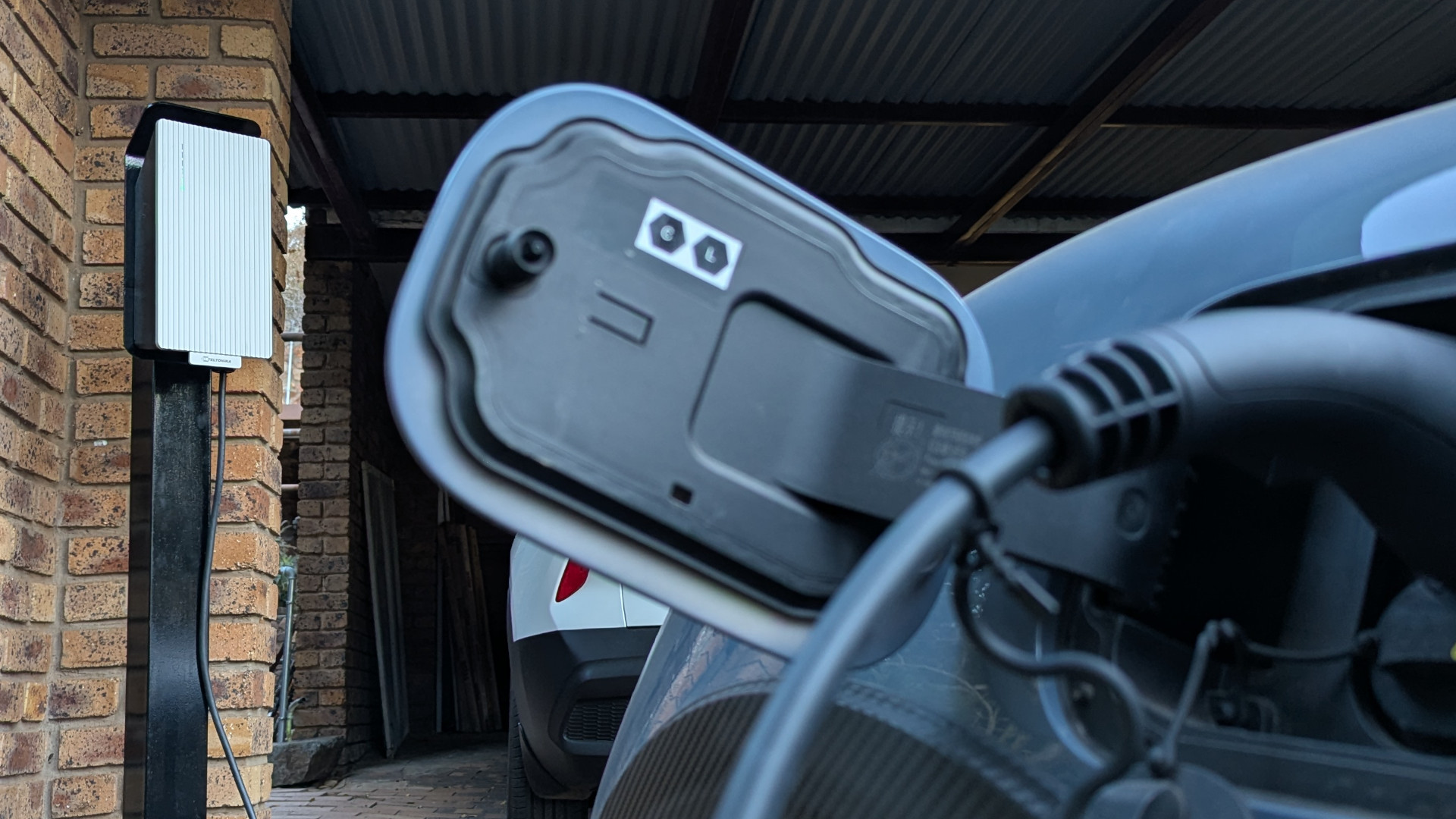
With the recent surge in fully-electric and plug-in hybrid car sales in South Africa, many accommodation establishments may be getting a question frequently that they have never or very rarely heard in the past: "Can I plug in my car?"
The ability to charge up overnight and start the next day with a topped-up battery is likely to become a must-have or sought-after option for drivers of these vehicles selecting their accommodation for a holiday or business journey.
Many will likely be willing to pay at least a slight premium over what it costs to charge at home for the establishment's assistance in helping them cut down on time spent on the road, especially if they can do so while asleep.
Given the high cost of electricity, many accommodation establishments cannot afford to allow charging for free.
EVs have large batteries that cost hundreds of rand to refill on current electricity tariffs (thanks Eskom).
However, not offering charging as an option could make an establishment far less appealing.
In fact, Conduit Energy believes this feature will be an absolute no-brainer as South African motorists gradually transition to e-mobility.
The Manual Method
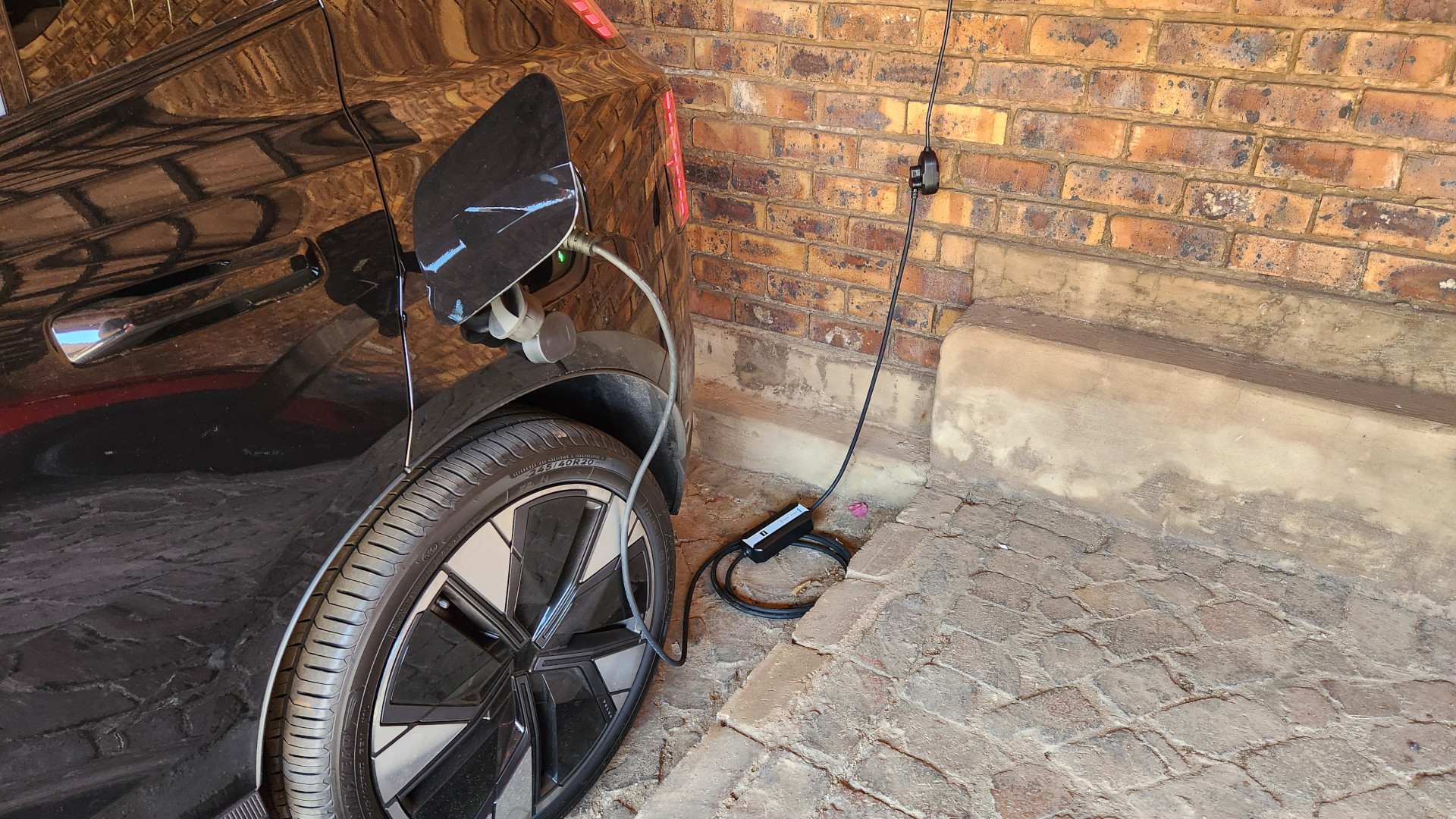
One simple option is to let the guest plug in to a regular socket with their portable charger for a fixed fee, which they can pay beforehand or at checkout.
But precisely what fee will drivers be willing to pay? Many are tech-savvy and meticulous about their running costs.
Overcharging could create a bad impression of an establishment's eagerness to make a quick buck, while undercharging will leave it subsidising the charging.
One driver might only need a 30% top-up, while another barely made it to the destination and wants to fill up 98% of their pack.
A 30% charge on one of South Africa's best-selling EVs — the BYD Dolphin Surf — will only require about six kilowatt-hours (kWh) of energy, commonly referred to as electricity "units".
At the current Eskom business rate of R3.59 per kWh, that energy would only cost roughly R21.54, not accounting for energy losses.
On the other side, some of South Africa's high-end EVs have batteries with capacities over 100kWh.
If a driver of such a vehicle wanted to charge up 98% of that pack, the energy would cost R351.82 at the same rate.
Determining an appropriate fixed fee that would account for all the different possibilities would be a complex undertaking.
While you could ask each driver how much capacity they have and how much they want to charge, there would be no way of verifying this without actually checking their dashboard.
Some guests might consider this to be invasive or regard not taking their word as gospel as an insult.
For a reasonable fee, the ideal way is to measure the energy and calculate the cost of it, with a paper trail to show the customer.
One basic way to do this is to install a smart plug to measure energy at the plug point. You could even enable and disable the plug to start and stop sessions.
However, managing this will take extra time and effort. Readings from off-the-shelf smart plugs can also be risky, given South Africa's laws on commercial billing of energy.
Hand It Off
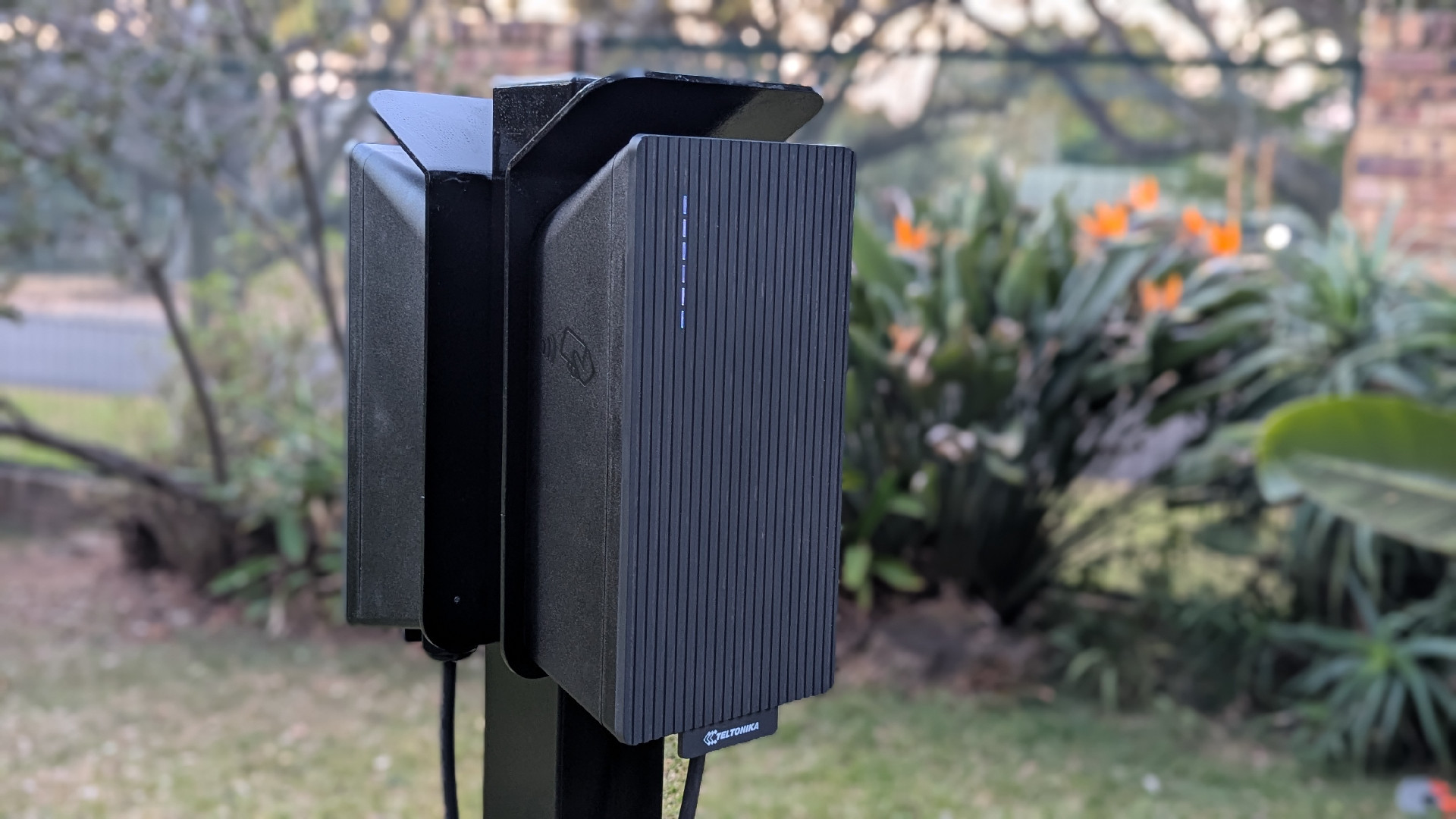
The optimal and most convenient solution for the establishment and its guests is to install a dedicated charger integrated with a fully-fledged charging management system (CMS), which automates energy measurement and billing.
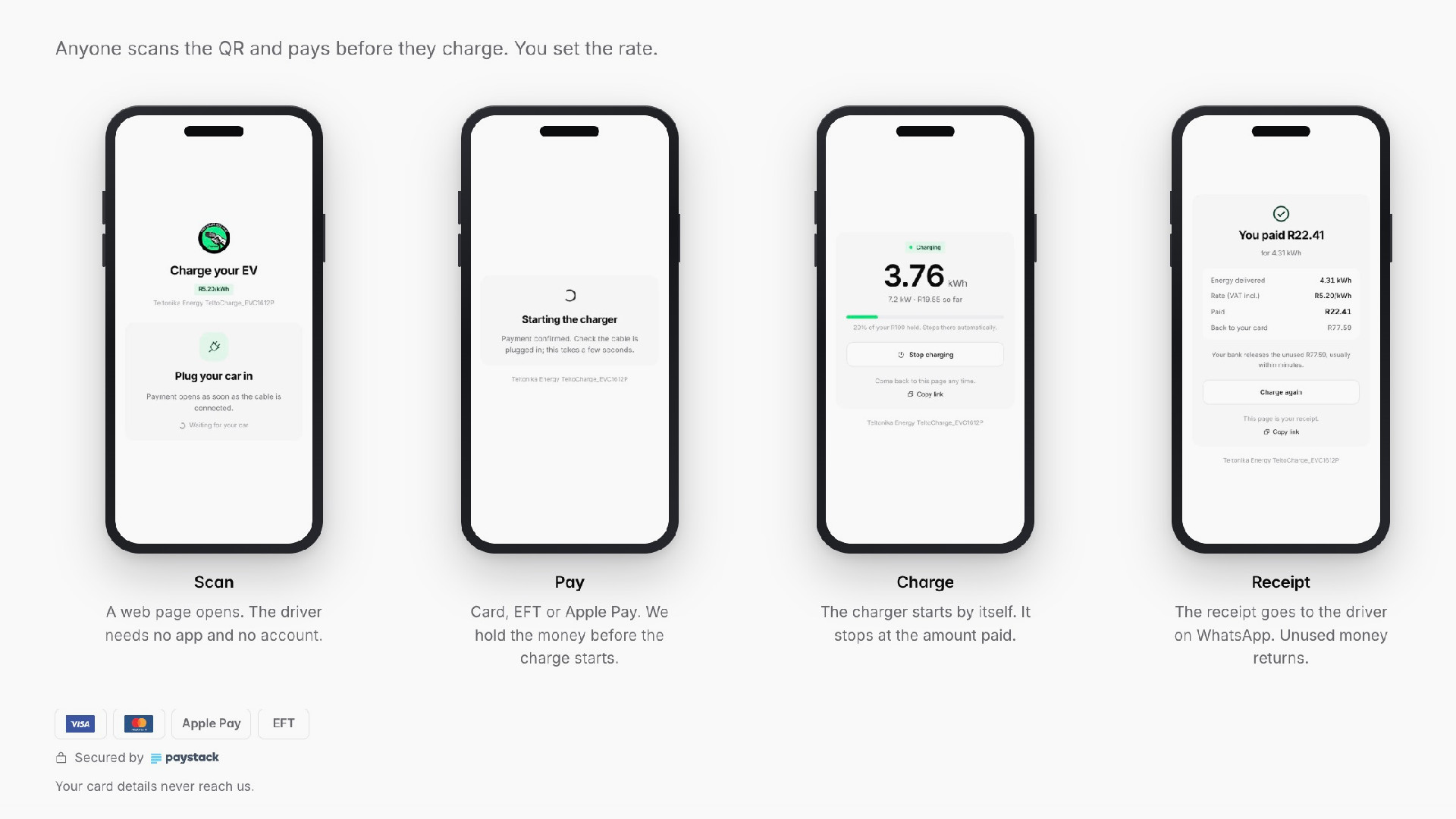
Visitors simply tap their phone on the charger or scan a QR code, and they are directed to a secure payment portal where they must provide their bank card details and select a maximum "hold" value for which they want to charge.
Once the charge is complete, the actual value of their session is deducted from their card.
The money for the energy is settled into your bank account within days.
You can also choose to levy a smaller fixed service charge for the amenity without risking a loss, as the setup still guarantees you get all the money back for the energy.
All of the metering is done inside the charger and logged online in the event of a power failure.
A dedicated charger can also support faster charging speeds than a portable unit, a fact that drivers are likely to consider in weighing whether a service fee is worth the extra money.
A proper CMS provider will also give the establishment an online dashboard where they can view the charger's live status, session history, energy consumption, and costs.
Full charging management with user billing from R95 per month
Conduit Energy offers end-to-end EV charging solutions with a CMS to simplify EV charging energy measurement and billing.
Starting from R95 per month, an accommodation establishment can link up its chargers to our system and enable simple metering and payments for guests, staff, and other visitors.
You could easily make up the subscription cost with two or three charging sessions through highly reasonable fixed session fees.
While we offer a range of chargers to buy that suit all customers' requirements, the platform supports any charger with OCPP and Internet connectivity.
No hardware or software lock-in. If you pay for your own charger, our subscription is month-to-month. If you are unhappy with our service, you can switch to another CMS.
In some cases, especially at high-traffic establishments like those with restaurants open to the general public, Conduit can deploy a charger at its own cost and share the revenue with the establishment under a 24-month or 36-month contract.
For more information, contact Conduit Energy at info@conduit-energy.com or via WhatsApp at 061 617 2373.